David A. Micha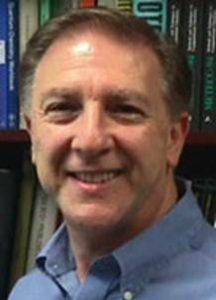
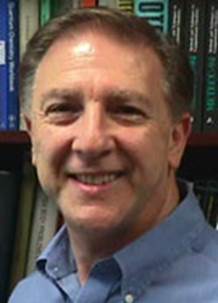
Emeritus Professor and Adjunct Professor
Research
Our research deals with theoretical and computational aspects of molecular and materials sciences, with emphasis on the unified treatment of physical and chemical kinetics using quantum molecular dynamics. It includes collision-induced and photoinduced phenomena in the gas phase, clusters, and at solid surfaces. Our aim is to provide a fundamental approach to molecular dynamics, where electronic and nuclear motions are consistently coupled to account for quantal effects. We use quantum and statistical mechanics, mathematical, and computational methods, to describe time-dependent phenomena (such as femtosecond dynamics and spectra) in both simple and complex molecular systems. Present areas of research include optical and conductivity properties of semiconductor surfaces, as they relate to photovoltaics and to photocatalysis..
Teaching
My teaching has included graduate and undergraduate courses at the University of Florida, and lectures at Winter and Summer Schools in the USA, Norway, Sweden, Mexico, Argentina, Uruguay, and Venezuela. Graduate courses covered chemical bonding and spectra, statistical thermodynamics and advanced kinetics, and a series of courses on chemical physics for chemists, physicists and engineers on intermolecular forces, molecular scattering theory, surface science, molecular dynamics and kinetics, and computational methods. Undergraduate courses covered physical chemistry and general chemistry.
Mentoring and advice
A total of 24 PhD Dissertations have been completed under my direction and mentoring, of which 15 PhDs have been in Chemistry and nine in Physics. I have also mentored several undergraduate students doing research in our areas, and resulting in journal publications under their names. A total of 13 postdoctoral associates have joined my research group in past years, in collaborations leading to publications.
Background
- Born in Argentina and a U.S. citizen since 1974
- Lic. Phys. (M.Sc.), University of Cuyo, Bariloche, Argentina, 1962
- Fil. Lic. (Ph.D.), University of Uppsala, Sweden, 1965
- Fil. Doktor (D.Sc.), University of Uppsala, Sweden, 1966
Contact Information
Email: micha@qtp.ufl.edu
Phone: (352) 392-6977
Fax: (352) 392-8722
Office: 2318 New Physics Building, UF, Gainesville, FL 32611-8435